
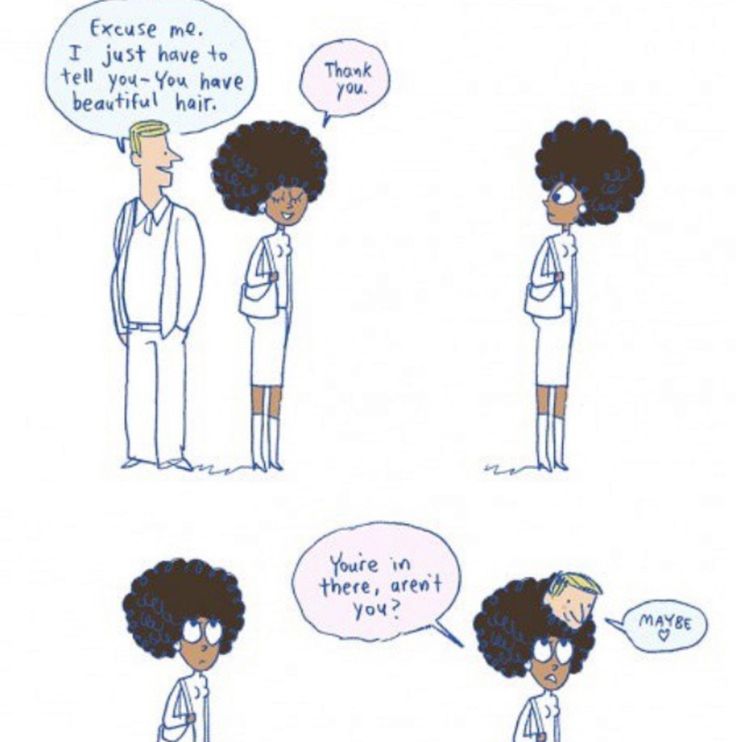
Lucky for me, my wife did lower her expectations. As most couples come to find out, there is a big difference between what we expect each other to be and who we really are. Oh, I remember the honeymoon days of the ‘knight-in-shining-armor’ bravado, and the ‘damsel-in-distress’ portrayal that we played. We even had a metal knight named ‘Wesley’ standing at our door. We were the cliched hopeless romantics, defiant of all the onlookers and naysayers who disapproved of our union. There were whispers of, “They shouldn’t have so many kids.” “Look what they are putting them through.”, they’d say (giving the notion that since our kids will be mixed, they will have a hard life not fitting in with the blacks or the whites). Yet, we sallied forth with the confidence that we, with faith as our sword, could slay any ‘dragon’ that would come our way. My wife and I both had previous relationships that didn’t work prior to our marriage and we knew we could avoid the same errors in our relationship.
Who knew that our ‘dragon’ was actually a bunch of little dragons that we had within ourselves, and has been there for a long time. One of the dragons we called: ‘Selfishness’. And another: ‘Imperfections’. Let’s not forget the dragon we dubbed, ‘Unfairness’ We even found ‘Differences’, as well as others that popped up. We didn’t count on these little fire hazards applying so much heat into our relationship. We, as veteran fighters fought long and hard, yet still felt like novices. As I worked on my second marriage, I began to see that I still needed to work just as hard, or harder, with my new wife as I did with my first.
My observation has been confirmed in H. Wallace Goddard’s “Drawing Heaven into Your Marriage”, on page 49, he recounted a quote from marriage therapist Daniel Wile who said that choosing a partner is choosing a set of problems. “Each potential relationship has its own particular set of inescapable recurring problems…. There is value, when choosing a long-term partner, in realizing that you will inevitably be choosing a particular set of unresolvable problems that you’ll be grappling with for the next ten, twenty, or fifty years. We can be mad or cheated because of those problems. We can move on to another relationship – which will inevitably have its own set of problems. Or we can become experts in dealing with the particular challenges faced in our current relationship.” (2009)
Fast forward twenty years and ‘Wesley’ is gone and probably rusting out in front of some antique or video store. The dragons? Well, they are not slain, but they are now mostly domesticated and don’t rear up to cause us as much havoc anymore. It doesn’t mean that the dragons don’t, from time to time, decide to ‘flair up’. They sure do. They fought us hard, and I humbly say, they taught us some powerful and valuable lessons. One of the best lessons is that we are all lumps of coal – with a lot of pressure and heat we become diamonds. I now see that heat, time, and pressure has transformed us (kids included) into hardened, better beings. I guess the cliché is true: ‘Whatever doesn’t kill you, makes you stronger.’ It has turned my love for my wife into something more than a fairy tale, more noble than a knight, more beautiful than a damsel, sharper than any sword, and stronger than any armor, and that is – commitment.
As we look back, we see that change comes, even at our age. It just happens in our own time and way, not through the hypocritical way of ‘expectations’. This eternal ability to change is accredited to and made possible by the very God who condescended below us all with his sacrifice. This knowledge is the mainstay of our marriage, the hope of the Saints, and of our first parents, Adam and Eve. I believe God had this in mind when He laid the foundation of this earth. “And I, God, saw everything that I made, and, behold, all things which I had made were very good….” (Moses 2:31)
(edited by Liz Morrison)
References Goddard, H. W. 2009. Drawing Heaven into Your Marriage. Joymap Publishing. Cedar Hills, UT. Building character through sacrifice. p 49.


 Dane's Blog